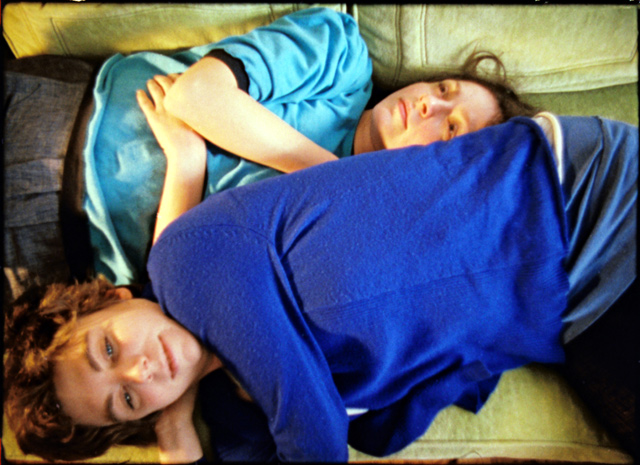
2010, 14 min, 16mm
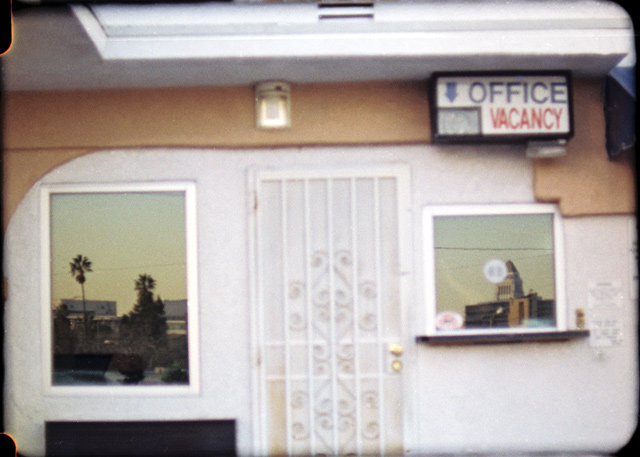
Los Angeles City Hall is reflected onto the window of the Paradise Motel. It serves as an anchor for this traversal through the natural expanse of California. Here, we discover a restrained psychodrama of play, loss, and the transformation of everyday habitats. Music appears across the interiors and exteriors and speaks of limitlessness and longing. (LL)
--Camera, Editing, Directing: Laida Lertxundi
Sound: Dan Boer, Lindsey Hoffmann, Laida Lertxundi,
Albert Ortega, Lucas Quigley
Sound mix: Ezra Buchla
Music: Beethoven, Black Velvet, The Blue Rondos,
Laura Steenberge
Typography: Lucas Quigley
With: Lindsey Hoffmann, Beau Johnson, Laura Merando,
Albert Ortega, Tanya Rubbak, Laura Steenberge
Location: Los Angeles Benton Montaña de Oro
San Luis Obispo, California, USA
Thank you: Thom Andersen, Betzy Bromberg,
Mark McElhatten, C.W. Winter
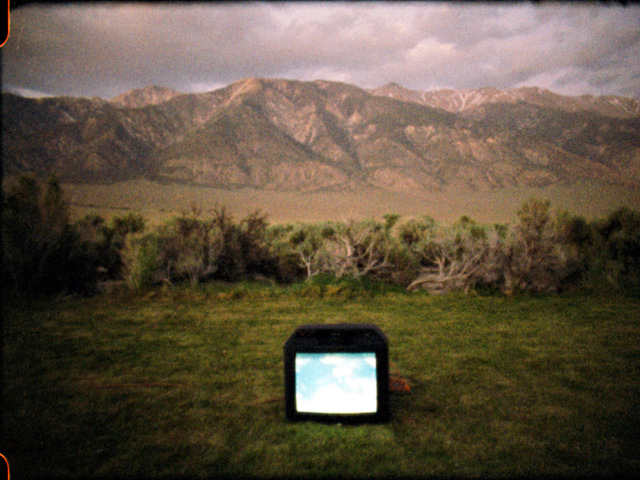
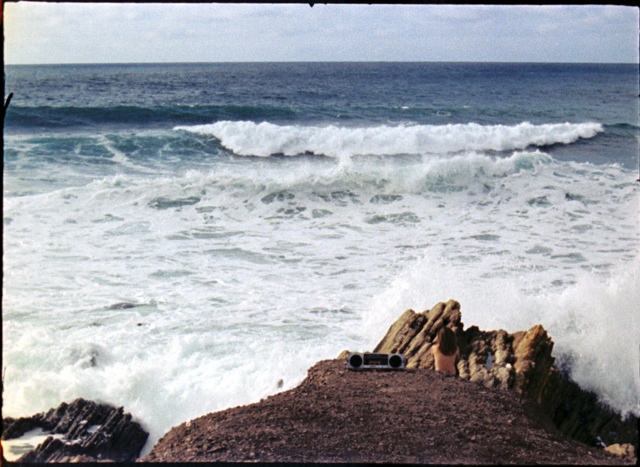
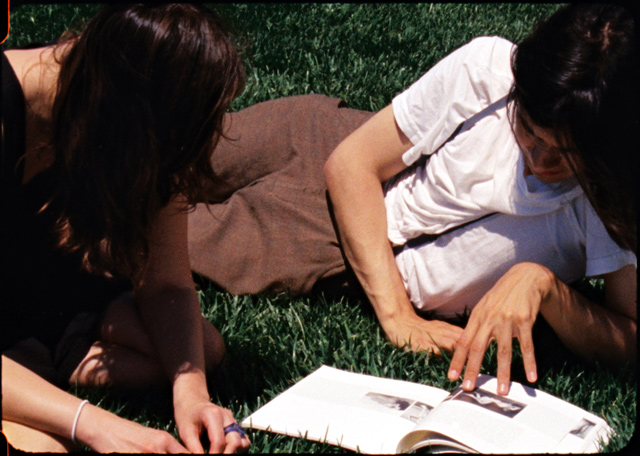
"Llora Cuando Te Pase embarks on a warm and serene transfer between the concepts of presence and absence. From the young people on screen at the start (two girls lying on a sofa first, two boys in a motel later), there follows an expansive exploration of the different landscapes of Los Angeles. The film contains the image that has become a premature icon of the works of the author: the TV set in front of the mountain, a object for the transmission of memory placed in an unforgettable natural space; it is an energetic and extremely peculiar example of cinema within cinema. In Laida Lertxundi's creations, the blue of the sky continues to shine and the music (in this case 'Little Baby' by The Blue Rondos generating vitality and dynamism) continues to be heard even when night falls."
-Javier Estrada pdf
back